
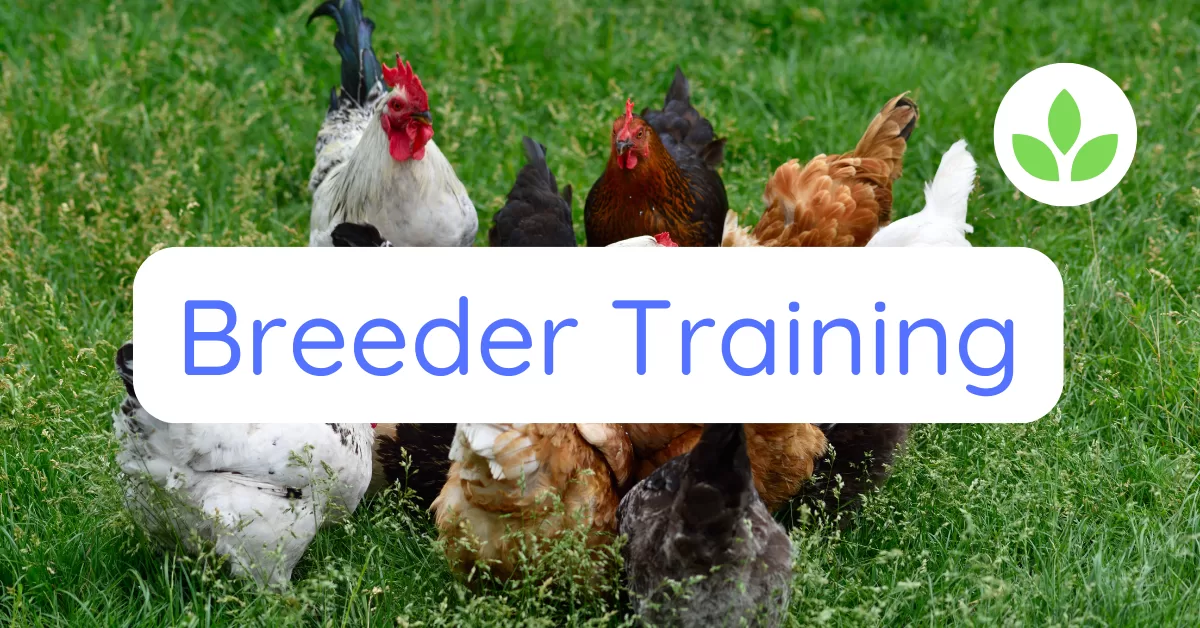
At GroSpace, we understand that the success of the poultry industry begins with the breeders who produce fertile eggs for laying hens. Fertile eggs are the foundation of a strong and sustainable poultry farming operation, and producing them requires specialized skills, knowledge, and attention to detail. Our Poultry Breeder Training program is designed to equip farmers with the expertise needed to breed healthy, productive poultry for the production of high-quality fertile eggs.
1. The Importance of Poultry Breeder Training
Breeding poultry for fertile egg production requires a deep understanding of poultry genetics, flock management, nutrition, and biosecurity. Farmers must ensure that their breeding flocks are healthy, well-fed, and housed in optimal conditions to produce eggs with high hatchability rates.
GroSpace’s training focuses on:
- Flock Genetics: Selecting and maintaining breeder stock with superior genetic traits for productivity and disease resistance.
- Breeder Management: Ensuring optimal male-to-female ratios, proper mating practices, and consistent monitoring of flock health.
- Egg Quality Control: Techniques to handle, store, and manage fertile eggs to maximize hatchability.
By mastering these skills, breeders can ensure that their flocks produce high-quality fertile eggs for laying hens, meeting the demands of hatcheries and poultry farmers.
2. Key Components of the Poultry Breeder Training Program
GroSpace’s Poultry Breeder Training is structured to cover all aspects of breeding fertile eggs, with a focus on sustainable and profitable practices. The program includes:
Flock Selection and Breeding
One of the critical factors in fertile egg production is selecting the right breeder stock. Our training guides farmers on:
- Choosing breeds with high egg production and hatchability rates.
- Managing breeding programs to ensure genetic diversity and long-term flock health.
- Maintaining an ideal male-to-female ratio for successful mating. For laying hens, a typical ratio is 1 male to 10-12 females, ensuring consistent fertilization without overburdening the males.
This component ensures breeders can optimize fertility rates while maintaining a strong and healthy breeding flock.
Nutrition and Feed Management
Proper nutrition is essential for breeding flocks to remain healthy and productive. GroSpace provides detailed training on:
- Developing feed programs tailored to breeder birds at various stages of their reproductive cycle.
- Ensuring optimal levels of protein, calcium, vitamins, and minerals for strong eggshells and high fertility.
- Introducing GroFeeds, a sustainable feed solution tailored specifically for breeder flocks, to ensure consistency in nutrition and cost-effectiveness.
Farmers are also trained to identify signs of nutritional deficiencies in their flocks and make timely adjustments to feed formulations.
Housing and Environmental Management
The environment plays a crucial role in the health and productivity of breeder flocks. GroSpace trains farmers on:
- Designing breeder houses that provide optimal conditions for breeding, such as proper ventilation, temperature control, and lighting programs that stimulate fertility.
- Implementing effective biosecurity measures to prevent disease outbreaks, including foot baths, restricted access to breeder areas, and routine health checks.
- Providing adequate nesting space and managing floor space to reduce stress, encourage natural mating behaviors, and prevent injuries.
A well-managed environment is key to improving egg production and maintaining flock health.
Egg Handling and Storage
Proper handling and storage of fertile eggs are critical for maintaining their viability. Farmers are trained on:
- Collecting eggs promptly and carefully to prevent contamination or damage.
- Cleaning eggs using approved methods to reduce the risk of bacterial contamination while maintaining the eggshell’s protective coating.
- Storing eggs at the correct temperature (15-18°C) and humidity levels to preserve fertility before incubation.
- Transporting eggs with minimal movement and vibration to maintain their viability and increase hatchability rates.
These practices ensure that eggs remain in the best possible condition until they reach the hatchery.
3. Business Opportunities in Fertile Egg Production
Fertile egg production is a lucrative and stable business opportunity for poultry farmers. With GroSpace’s Poultry Breeder Training, farmers can gain the skills and confidence needed to build a profitable breeding operation. Joining GroSpace’s network of breeders also opens doors to reliable contracts and steady income.
Market Access
GroSpace facilitates direct market access for breeders, connecting them with hatcheries that require a consistent supply of fertile eggs. Through contract-based agreements, breeders enjoy guaranteed buyers for their eggs, providing financial stability and reducing market uncertainty.
Investment and Support
GroSpace offers investment opportunities to help breeders expand their operations. Farmers can access seed capital, infrastructure upgrades, and consulting services to improve their breeding facilities and increase production capacity. This support ensures that breeders can meet the growing demand for fertile eggs in the poultry industry.
4. Training for Long-Term Success
GroSpace’s Poultry Breeder Training is not a one-time program—it’s an ongoing partnership. We provide continuous consulting to ensure that farmers refine their techniques, adopt new technologies, and stay competitive in the evolving agricultural landscape. Areas of continuous support include:
- Monitoring Flock Performance: Regular health checks and fertility assessments to ensure optimal production.
- Adapting to Market Needs: Adjusting breeding programs to meet changing demands for egg quality, volume, or specific poultry breeds.
- Technology Integration: Introducing tools and systems that improve efficiency, such as automated egg collection systems or advanced feed management software.
Farmers who partner with GroSpace gain access to a wealth of knowledge and resources, empowering them to grow their businesses sustainably.
5. Success Stories: Breeders Thriving with GroSpace
Farmers who have completed GroSpace’s Poultry Breeder Training are seeing remarkable results. Here are just a few examples:
- Breeder in South Africa: This farmer increased their flock’s fertility rate by 25% by implementing GroSpace’s advanced flock management techniques. The improved fertility rates allowed them to meet higher demand and significantly increase their profits.
- Small-Scale Breeder in Kenya: With GroSpace’s support, this breeder expanded their operation to supply fertile eggs to multiple hatcheries. By adopting GroSpace’s feeding and housing strategies, they doubled their income within two years.
6. Conclusion: Start Breeding the GroSpace Way
Producing fertile eggs for laying hens is a rewarding and sustainable business opportunity for poultry farmers. With GroSpace’s Poultry Breeder Training program, farmers gain the skills and knowledge needed to manage productive breeding flocks, maintain egg quality, and meet the demands of the growing poultry industry.
Whether you’re new to poultry farming or looking to expand your operations, GroSpace is here to help you succeed. Our training program, market access, and ongoing support provide the foundation for long-term success in fertile egg production. Join us today and start breeding the GroSpace way!
Tags: Poultry Breeder Training, Fertile Eggs, Laying Hens, GroSpace, GrowSpace, Growth Space, Breeding Poultry, Sustainable Farming, Flock Management, Egg Quality, Biosecurity